When water silently seeps beneath your concrete floor, the damage it causes is anything but silent. Structural cracks, rising damp, sky-high water bills, and compromised foundations are all consequences of a slab leak left untreated. Choosing the right slab leak repair company can be the difference between a quick, cost-effective fix and a lengthy, expensive renovation. Our team brings together certified plumbing engineers, cutting-edge detection equipment, and a proven repair methodology to protect your home from the inside out.
Slab leaks are among the most serious plumbing emergencies a homeowner can face. Unlike a dripping tap or a burst pipe visible under a sink, a slab leak hides beneath several inches of solid concrete. Without the right tools and expertise, detecting its exact location is nearly impossible. That is why professional intervention from a qualified slab leak repair company is not just recommended — it is essential.
⚠ A single undetected slab leak can waste up to 10,000 gallons of water per month and silently erode your home's concrete foundation over time. Early professional detection saves thousands of pounds in structural repair costs.
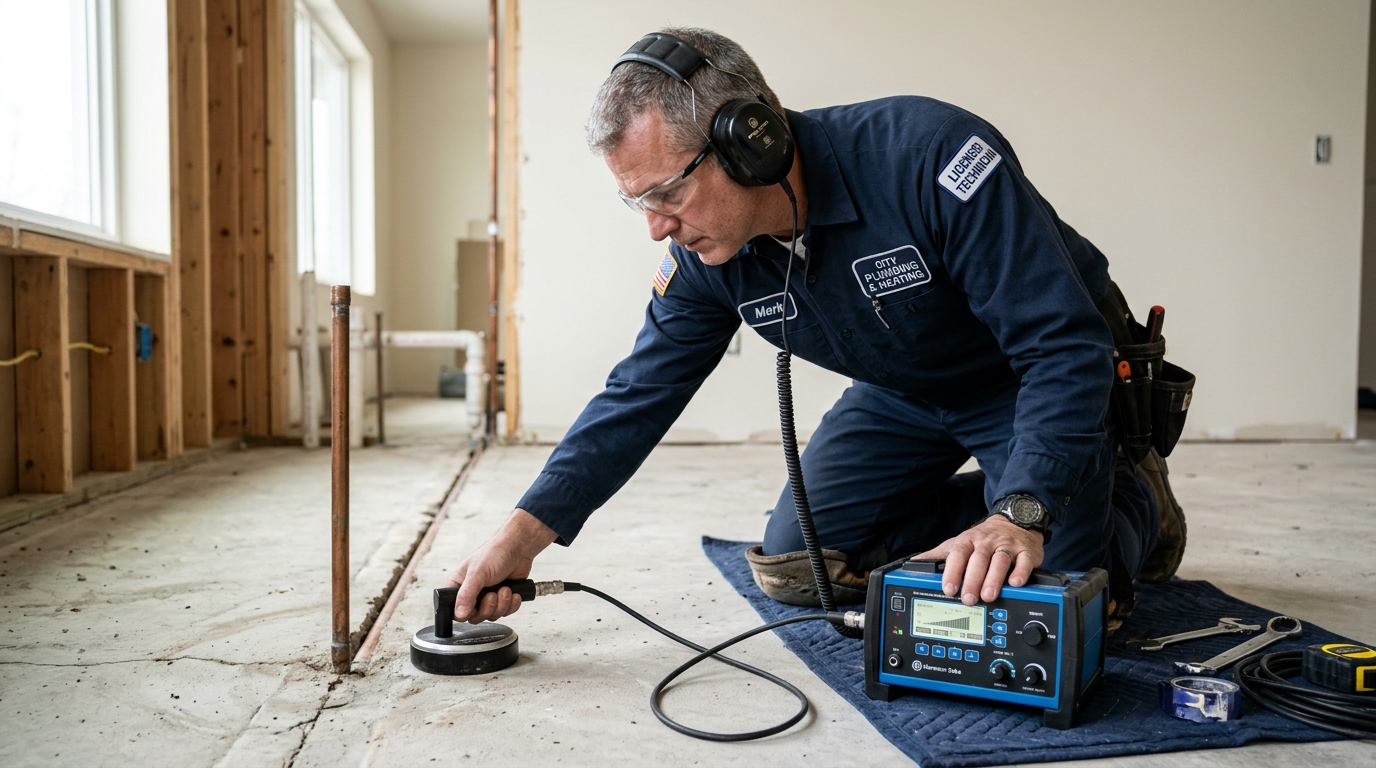
Understanding Slab Leaks: What They Are and Why They Happen
A slab leak occurs when a water pipe running beneath a concrete foundation develops a crack, hole, or joint failure, allowing water to escape into the surrounding soil or upward through the slab itself. These pipes are typically part of the building's main water supply system or its drainage network — both of which operate under constant pressure.
The causes of slab leaks are varied. In older properties, copper pipe corrosion is one of the leading culprits. As copper reacts with hard water minerals over decades, the pipe walls thin and eventually perforate. In newer buildings, poor installation practices — including improper pipe bending, insufficient bedding material, or pipes placed under excessive load — can trigger premature failure.
Soil movement is another significant cause. The UK's clay-heavy soils are particularly susceptible to seasonal shrinkage and expansion. As the ground shifts beneath a property, buried pipes are subjected to stress forces that can crack joints or bend straight sections until they fail. Properties built on poorly compacted fill material face an even higher risk of this type of slab leak damage.
Warning Signs You Should Never Ignore
- Unexplained increase in water bills — if usage hasn't changed but costs have risen sharply, a hidden leak may be to blame
- Sound of running water with all taps turned off
- Warm or wet patches on floor surfaces — particularly on tiled or vinyl floors
- Visible cracking in walls or floor tiles near the foundation
- Damp or mouldy smell rising from floor level
- Low water pressure throughout the property
- Pooling water around the exterior base of the building
- Subsidence or uneven flooring developing without apparent cause
If you notice any combination of these symptoms, contacting a professional slab leak repair company without delay is strongly advised. The longer a slab leak continues undetected, the more severe and costly the resulting structural and water damage becomes.
Advanced Detection Technology: How We Find Leaks Beneath Your Slab
Modern slab leak detection is a science. Our technicians are trained in multiple detection disciplines, allowing them to identify leaks with a high degree of accuracy before any physical work begins. This precision is critical — unnecessary concrete removal adds cost, disruption, and repair time to every job.
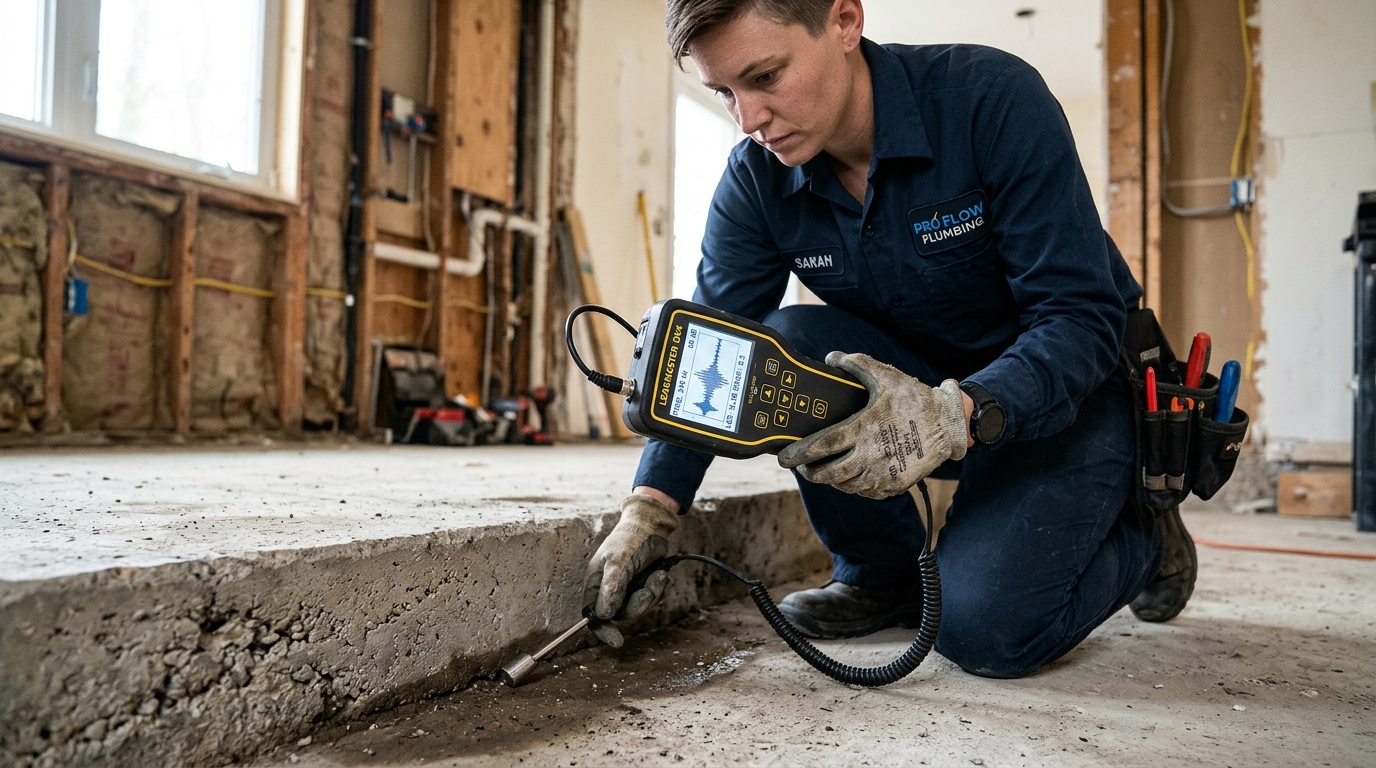
Acoustic Leak Detection
Acoustic listening equipment amplifies the sound of water escaping from pressurised pipes. Using a ground microphone with adjustable frequency sensitivity, our engineers scan systematically across the floor surface. The leak produces a distinctive frequency signature — a hissing, rushing, or percussive sound — that differs from the ambient noise of the surrounding building. By cross-referencing readings taken from multiple positions, we can triangulate the precise leak location to within a few centimetres.
Electronic Correlator Technology
When acoustic listening alone does not yield a definitive location, we deploy electronic correlation technology. Two sensors are placed at known points along the pipe route — typically at accessible fixtures or inspection points. Each sensor records vibrations travelling through the water and pipe wall. Our correlator software analyses the time difference between these signals and calculates the exact leak location based on the pipe's known diameter and material properties.
Thermal Imaging Cameras
Infrared thermography is an invaluable tool for detecting hot water pipe leaks. When a hot water line beneath a slab develops a leak, the escaping water raises the temperature of the concrete above it. A thermal imaging camera captures these heat differentials as a visual map, allowing us to see exactly where the hot spot — and therefore the leak — is located. This technique is non-invasive, rapid, and highly effective for identifying the general leak zone before precision acoustic tools confirm the exact point.
Pressure Testing and Pipe Tracing
Before any detection work, our engineers conduct a pressure drop test to confirm that a leak exists and to quantify its severity. Nitrogen or air is introduced into the pipe system under controlled pressure. A sustained pressure drop confirms an active leak. We then use pipe tracing equipment — which follows the electromagnetic signal from a transmitter placed inside the pipe — to map the entire pipe route beneath the slab and identify anomalies in the signal that correspond to damaged sections.
Tracer Gas Detection
For the most elusive slab leaks, particularly those occurring in drain pipes or under exceptionally thick concrete slabs, we use tracer gas (a safe hydrogen and nitrogen mixture). The gas is introduced into the pipe and permeates through the soil to the surface, where a highly sensitive sniffer probe detects its presence. This technique is effective even when acoustic methods cannot isolate a specific point, particularly in noisy environments or on pipes running through deep or reinforced slabs.
🔧 Pipe Rerouting
When a slab pipe is severely corroded or damaged across a long section, rerouting is often the most cost-effective long-term solution. We install a new pipe run above the slab using existing voids, wall cavities, or ceiling spaces, completely bypassing the failed underground section.
🛠 Spot Repair
When the leak is isolated to a single point, targeted spot repair minimises concrete removal. We cut precisely at the identified location, expose the damaged pipe section, and repair or replace only the affected portion before reinstating the concrete.
💧 Epoxy Pipe Lining
Pipe lining is a trenchless repair technique. A flexible, epoxy-saturated liner is inserted into the damaged pipe and inflated against the internal surface. Once cured, the liner creates a smooth, corrosion-resistant internal pipe within the original — restoring full flow capacity without excavation.
🏗 Full Pipe Replacement
For severely degraded pipe networks where multiple failures exist or are likely, full pipe replacement beneath the slab provides a permanent solution. We plan the excavation and replacement to minimise disruption, working in sections to maintain partial water supply throughout the process.
📊 Concrete Restoration
Once all pipe work is complete, we reinstate the concrete to its original specification — matching the existing slab thickness, aggregate type, and surface finish. We use rapid-set compounds where timing is critical and cure the repaired area thoroughly before returning the floor to use.
🔍 Post-Repair Verification
Every repair is followed by a full pressure test and thermal imaging check to verify the integrity of the work. We do not consider a job complete until we have confirmed with instrumentation that the leak is fully resolved and no secondary issues remain.
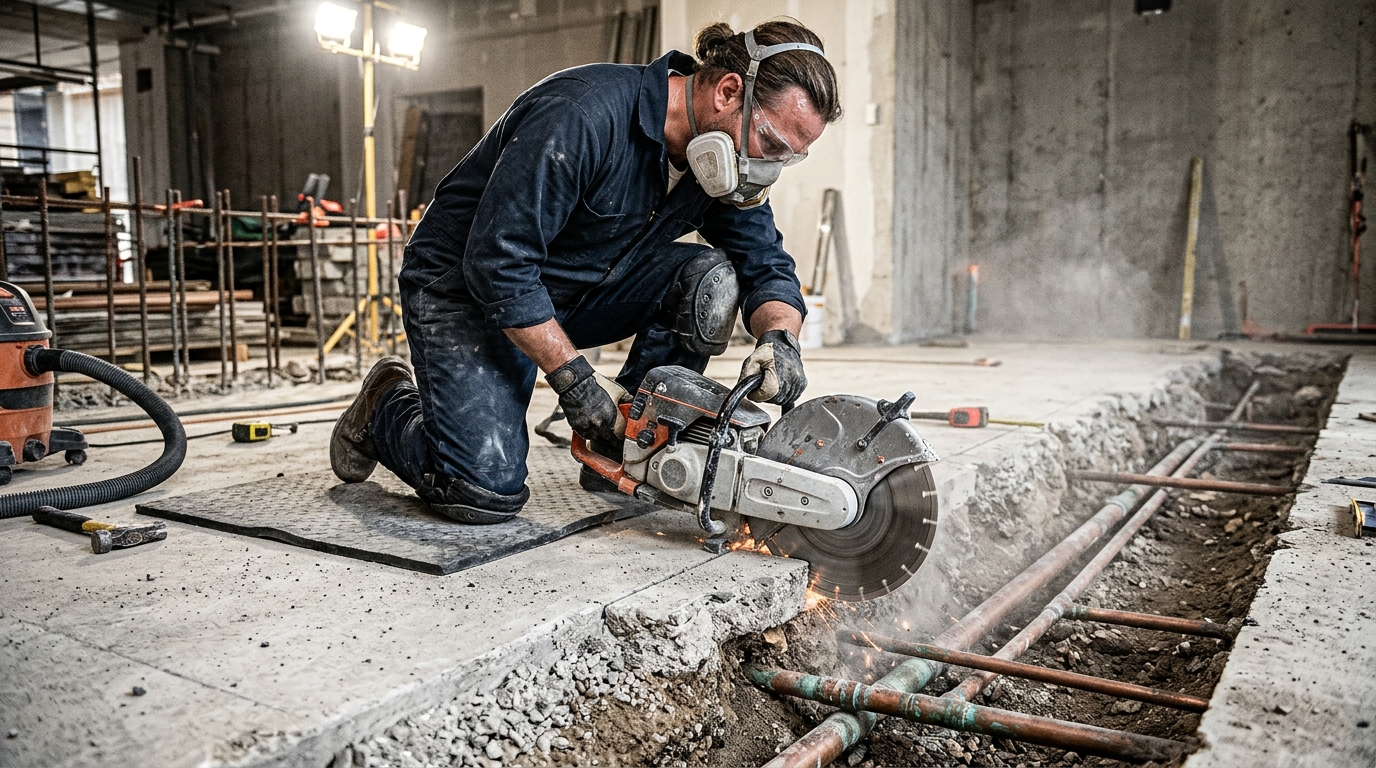
Our Step-by-Step Slab Leak Repair Process
Every slab leak repair project we undertake follows a structured, documented process. This ensures nothing is overlooked, that our work meets the highest professional standards, and that homeowners are fully informed at every stage.
Step 1: Initial Assessment and Site Survey
The first step is a thorough site survey. Our engineer visits the property, reviews the available plumbing drawings (where present), inspects visible symptoms, and conducts an initial pressure test to confirm and quantify the leak. We document all findings and use them to plan the most appropriate detection approach.
Step 2: Non-Invasive Detection
Using the most appropriate combination of acoustic, thermal, correlator, and tracer gas equipment, we locate the leak with the highest possible precision. Our goal at this stage is always to identify the leak point without removing any concrete. We produce a marked floor plan showing the confirmed or high-probability leak location before any physical work begins.
Step 3: Excavation Planning and Preparation
Once the leak is located, we plan the minimum excavation necessary. This includes checking for any reinforcement bars (rebar) in the slab using a cover meter, confirming the pipe route and depth, and protecting surrounding floor surfaces and furnishings. All preparation work is completed before any cutting begins.
Step 4: Controlled Concrete Removal
Using diamond-tipped saw-cutting equipment and controlled pneumatic breaking tools, we remove only the concrete necessary to access the leak. Dust suppression is used throughout to protect the indoor environment. Excavated concrete and soil are removed and bagged for responsible disposal.
Step 5: Pipe Repair or Replacement
With the damaged pipe exposed, our plumber carries out the appropriate repair — whether spot replacement, joint repair, epoxy lining, or full section replacement. All new materials used are of the highest specification and meet BS EN standards for the application. Every connection is pressure-tested before the excavation is backfilled.
Step 6: Concrete Reinstatement
The excavated area is backfilled with compacted granular material to the correct depth, and new concrete is poured and finished to match the surrounding slab. We use a mix design that achieves the required strength within the project timeline, and we apply a curing compound to ensure the repaired section achieves its full strength before the floor covering is reinstated.
Step 7: Final Testing and Sign-Off
The completed repair undergoes a full pressure test to confirm that the system is leak-free. A final thermal imaging scan checks for any residual heat anomalies that might indicate secondary issues. Our engineer signs off the job and provides a written report detailing the fault found, the repair carried out, the materials used, and the results of all post-repair testing.
Why Slab Leaks Demand Professional Repair — Not DIY Solutions
It is understandable that homeowners sometimes attempt to manage small plumbing problems themselves. For a leaking tap or a loose connector, this is often entirely reasonable. Slab leaks, however, are categorically different. The consequences of an incorrect diagnosis or a poorly executed repair beneath a concrete slab can be severe and very expensive to correct.
Without professional detection equipment, it is virtually impossible to identify the exact leak location. Homeowners who attempt to find a slab leak by breaking up sections of floor often cause significant additional damage — both to the structure and to the pipe network — without ever locating the actual fault. By the time professional help is eventually called, the remediation bill is substantially higher than it would have been had a qualified company been engaged from the outset.
Beyond detection, pipe repairs beneath slabs must be carried out to strict plumbing standards. Joints must be pressure-tested before reinstatement, materials must be appropriate for the pipe material and water chemistry, and concrete reinstatement must be carried out correctly to prevent future subsidence or cracking at the repair site. Professional slab leak repair companies carry the certifications, insurance, and technical knowledge required to do all of this correctly and to guarantee their work.
📌 Also read our detailed guide on water leak detection and repair services:
Visit Our Foundation Leak Resource Hub →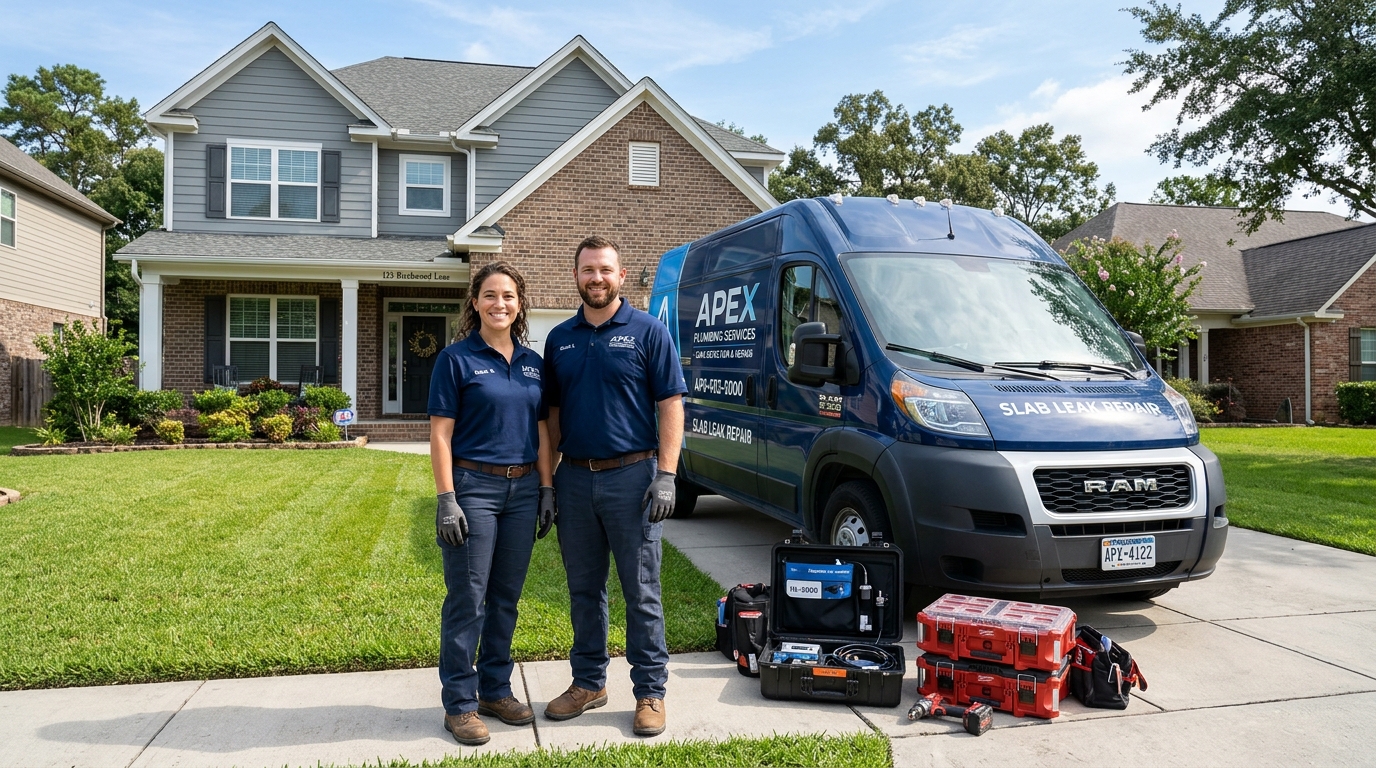
The True Cost of a Slab Leak: What Happens If You Wait
One of the most damaging misconceptions homeowners hold about slab leaks is that the problem can be monitored for a while before action is taken. The reality is that every day a slab leak remains active, additional damage accumulates — and additional costs mount.
In the early stages, a slab leak may waste a modest amount of water and produce only subtle symptoms. Within weeks, however, the saturated soil beneath the slab begins to shift. This movement causes the concrete to crack and settle unevenly. If the building has a timber subfloor over part of the slab, the damp conditions will begin to cause wood rot. Mould growth follows, spreading into wall cavities and affecting indoor air quality.
In severe cases, sustained slab leaks have caused full foundation failure — particularly in clay-heavy soils where the water causes significant swelling followed by extreme shrinkage during dry periods. The resulting subsidence can cause major structural cracking in walls and even render a property temporarily uninhabitable. Insurance claims for slab leak damage are typically covered only when the homeowner can demonstrate that reasonable steps were taken to investigate and address the problem promptly.
Financial Comparison: Early Repair vs. Delayed Repair
- Early detection and spot repair: £800 – £2,500 depending on access and pipe type
- Delayed repair with moderate floor damage: £3,000 – £6,000 including floor reinstatement
- Severe structural damage with foundation remediation: £10,000 – £50,000+
- Mould remediation (moderate case): £1,500 – £4,000 on top of plumbing costs
The figures make clear that early engagement of a professional slab leak repair company is not an expense — it is an investment in protecting your most valuable asset.
What Sets a Great Slab Leak Repair Company Apart
Not all plumbing companies offer slab leak services, and among those that do, there is a wide variation in expertise, equipment, and reliability. When selecting a slab leak repair specialist, the following criteria should guide your decision.
Specialist Equipment
A genuine slab leak specialist will own and operate multiple types of detection equipment, not just a single acoustic device. Ask what tools the company carries. Correlators, thermal cameras, tracer gas equipment, and pressure testing rigs should all be available in-house rather than subcontracted.
Documented Process
Professional companies provide written reports at every stage — a pre-work survey, a detection report with marked floor plan, a repair completion report, and post-repair test results. If a company cannot provide written documentation of its findings and work, treat this as a warning sign.
Industry Certification
Look for Gas Safe registration (where applicable), Water Industry Approved Plumber (WIAP) credentials, and membership of recognised trade bodies such as the Chartered Institute of Plumbing and Heating Engineering (CIPHE). These credentials confirm that the company operates to regulated professional standards.
Guarantee on Workmanship
Any reputable slab leak repair company will offer a minimum one-year guarantee on its workmanship. Some offer two or five-year guarantees on specific repair types. Always confirm the terms of any workmanship guarantee before work begins.
Transparent Pricing
Pricing for slab leak repair should be provided in writing before work begins, with a clear breakdown of detection fees, repair costs, materials, and concrete reinstatement charges. Avoid any company that is unwilling to provide a written quote or that quotes significantly below market rates without explanation.
Frequently Asked Questions
How long does slab leak repair take?
Detection typically takes 2–4 hours. A straightforward spot repair can be completed in one day. More complex repairs involving pipe rerouting or significant excavation may take 2–4 days. We will provide a realistic timeline estimate during the initial survey.
Will I need to leave my home during the repair?
For most slab leak repairs, you can remain in the property. We work in a contained area and use dust suppression throughout. For larger excavations, it may be more comfortable to relocate temporarily, but this is rarely a requirement.
Does my home insurance cover slab leak repair?
Most building insurance policies cover slab leak damage caused by sudden pipe failure, but coverage for gradual leaks is variable. We provide detailed written reports that support insurance claims and can liaise directly with your insurer's assessor where required.
How do I know my water meter is showing a leak?
Turn off all water outlets in the property and note your water meter reading. Wait 30–60 minutes without using any water. If the meter reading has changed, water is escaping somewhere in the system — a possible indication of a slab or other hidden leak.
Can slab leaks be prevented?
While not all slab leaks are preventable, regular plumbing inspections, water softening in hard water areas, and prompt attention to any early warning signs significantly reduce the risk. Homes over 20 years old with copper pipe systems benefit most from proactive inspection programmes.
What is the difference between pipe rerouting and pipe relining?
Pipe rerouting involves installing an entirely new pipe above the slab, bypassing the underground section permanently. Pipe relining (or lining) installs a structural epoxy liner inside the existing underground pipe, restoring it without excavation. The best option depends on the pipe material, the extent of damage, and the layout of the property.
Ready to Fix Your Slab Leak? Call the Experts Today
Do not let a hidden water leak silently damage your home's foundation. Our specialist team is ready to detect, diagnose, and repair your slab leak quickly and professionally.
Get Expert Slab Leak Repair Now →Conclusion: Choose the Right Slab Leak Repair Company From the Start
Slab leaks are complex, hidden, and consequential. Addressing them effectively requires specialist knowledge, professional equipment, and a proven repair methodology. Attempting to manage a slab leak without expert help almost always leads to greater damage, higher costs, and prolonged disruption to your home.
Our team has built its reputation on delivering accurate detection, precise repair, and transparent communication on every job we undertake. Whether you are dealing with the first signs of a potential slab leak or facing an active emergency that requires immediate attention, we are equipped to respond quickly and resolve the problem completely.
Contact our specialist team today to arrange a site survey and get the professional slab leak repair your property deserves. As a leading slab leak repair company, we stand behind every repair we carry out — with the documentation, guarantees, and customer support to prove it.